Feeds:
Posts
Comments

San Miguel de Allende moves you

Spencer Wynn
Toronto Star

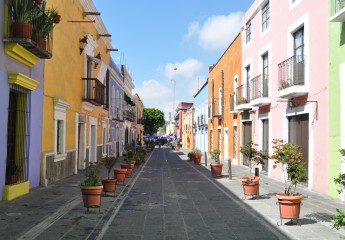
SAN MIGUEL DE ALLENDE, MEXICO—I suddenly felt like a wide-eyed kid standing in a candy store of brightly coloured houses and shops, spreading along sun-soaked narrow cobbled streets. This was not what I expected when I was invited to visit San Miguel de Allende.

After travelling four hours by road north of Mexico City, I arrive in the historic town of San Miguel. If I didn’t know this was Mexico, I could be forgiven for thinking it was a piece of old Europe. Every street is cobbled, every sidewalk narrow and this preserved town reflects the surrounding landscape of reds, deep yellows, blues and pinks.

San Miguel is a mile high, so go easy your first few days. Your breathing will feel a little light because of the altitude. Take the same advice for the tequilas that can be enjoyed in the many quaint restaurants and bars.

In the centre of this UNESCO World Heritage town is the impressive pink, multi-spired La Parroquia de San Miguel Arcangel, known simply as La Parroquia. It is from here I decide to walk north along Dolores Hidalgo-Celaya, on the shady side of the one-way street. Choose the sunny side, and you’re marked as a tourist. The shady side is crowded, and the high stone sidewalks are only wide enough for one person. Passing the tastefully subdued Starbucks (the only hint of a chain store in the historic part of town) I make my way to Harry’s Bar, an American institution.

Harry’s is bustling and filled with Canadians, American and a few Europeans. The food is delicious, inexpensive and the staff plentiful, attentive and friendly. It is here you can get the scoop on the expat community, or purchase a ticket to the bullfights. Today, people are stopping in to pick their seats for Friday’s event.

After a refreshing cerveza, I continue to the end of the block and turn right along Insurgentes to the Biblioteca Publica. Here the weekly Atencion newspaper can be purchased each Friday for 10 pesos (about 70 cents). Get there before noon as they go quickly. The paper is in English and outlines all the activities for the coming week. While at the public library, be sure to pick up a free copy of the San Miguel Walking and Shopping Guide. This will be a constant companion and a source of information on absolutely everything in San Miguel.

The Biblioteca, where you can also buy newspapers and magazines, offers tours, including the Sunday house and garden tour, and the three-times-a-week historic walking tour. These are great, inexpensive ways to experience the history and culture of San Miguel. In addition, they contribute to the work of Canadian and American volunteers who build up the stock of books for the Biblioteca, lead local literacy programs and develop scholarships for graduating students.

Up the stairs and to the right is a quiet little café where you can read your paper, have a fresh espresso and nod asleep to the sounds of the old stone fountain.

Sipping my coffee, I can see at least two charming places to stay. San Miguel has many boutique hotels and lovely bed and breakfasts. During my first visit here, I am staying in the home of some Canadian friends while they tour Europe. Each morning, I have breakfast on the patio of a neighbourhood B&B called Casa Carly. Carly’s is a restful pace providing seven private suites, many overlooking the fountain, gardens and pomegranate trees.

After my coffee and newspaper, I continue along Insurgentes, turn right onto Juarez and make my way south to San Francisco, the street that forms the northern boundary of the Jardin square in the Centro. Along the way, I pass the San Francisco church where, on last Sunday’s house and garden tour, we were able to go down into the crypt. For hundreds of years, Franciscan monks and priests have been buried in this crypt. (This was a very rare opportunity, as the crypt is normally locked by the church.)

The pedestrian-only square in the Centro is a shaded and manicured meeting place for young and old. Whether chatting about grandchildren or breakdancing in the gazebo, the park is San Miguel’s pulse. It’s a blend of old and young, slow and fast, local and foreign. The vibe here flows out in every direction throughout town.

A few days ago, the square was alive with workers erecting a bandstand for the mayor, who was doing her duties as the cheer leader of San Miguel and hyping the upcoming Independence Day festivals. Festivals happen here all the time, as do any chance to let off fireworks. Having a baby soon: Fireworks! An engagement: Fireworks! Another Saint’s Day: Lots of fireworks! Independence from Spain: Haul out the heavy artillery!

This weekend’s festivities will prove to be very, very loud and I’ve been forewarned to forget about trying to sleep at night.

I now confidently put away my map and can manage some of the confusing streets on my own. I still get lost occasionally along the oddly laid out streets, but only have to look for one of the many familiar church domes and I’m re-oriented!

My hiking boots are perfect for the streets here. One could very easily twist an ankle or worse. I mentioned cobbled streets. Yes. But many more streets are simply rounded rocks pushed into the ground. If you are a woman and think a pair of high heels would look awesome on your way to the clubs, think twice unless you want to wear a fetching cast on the patio the next day. Sensible footwear was made for San Miguel.

After a few days, I head out of town to do some exploring. An hour away, the revolutionary town of Dolores Hidalgo is worth a visit for its many shops offering handmade ceramics and rustic pottery. You can sample the legendary local ice cream, sold on the street. Flavours include tequila, beer, shrimp and even beef! But don’t worry, there is pistachio as well and it’s the best I’ve ever had! The cheerful and hospitable street vendors will go out of their way to have you try everything. Take them up on it.

A little further still is Pozos, a ghost town from the 1600s that was a thriving and wealthy mining town supplying silver to the Spanish. Today, it is slowly being reinhabited and much interest is focused on its rebuilding. Some say it will be the next San Miguel in 20 years. It has some surprisingly beautiful places to eat, stay and shop.

You can drive and tour the many ruins of old silver mines and smelters using the town map. Be warned, though, that the ruin that looks like three pyramids, in the opposite direction of town, is difficult to find, almost requires an off-road vehicle to reach, and is completely unsigned. We just happened to see it in the distance by chance and drove overland in its general direction.

One way to visit these places is by bus. But you better have a good command of Spanish, as almost nobody speaks English. The best way to go is to hire a driver who will take you anywhere you wish and stay with you, acting as a local guide as well. This option is highly recommended. And inexpensive.

Meet Fernando Ibarra, my driver. He is a 65-year-old dapper gentleman with a blinding white dress shirt and flowing grey hair. One of 12 children, he is punctual, effervescent, knowledgeable and has a charming sense of humour. Fernando can be hired for $160 Canadian per day, including gas. Daily personal expenses, such as meals and attraction entrance fees, are not included.

I am staying in the northern part of San Miguel, a short walk from the Centro, in an area called Guadalupe. It is quiet, a family neighbourhood of winding streets and is a little more rustic than the Centro. This is a perfect place to settle and build a house.

Nearby are a few schools with excited children running about in blue-and-red uniforms, a vast, gated, high-end condo complex and the Fabrica La Aurora art and design centre. Once a muslin mill, the factory buildings have been carefully preserved and turned into galleries, studios and a couple of cafés. You can wander the complex for hours, marvelling at the avant garde ceramic sculptures, metal installations, beautiful handmade jewellery and hand-crafted furniture and paintings. This is a place designed along the lines of Toronto’s Distillery District.

I have now been here for two weeks and have only seen a fraction of San Miguel. It is understandable why so many people from Canada and the United States come here to live year round or at least part-time. It is safe day and night, it has a thriving arts community, and it has an idyllic dry temperature.

These attributes of San Miguel are on my mind as I begin to pack for my direct return flight to Toronto. My bags are heavier with some gifts and something else — my copy of Atencion with real estate listings and pictures to make me dream of returning again, maybe for a much longer stay!

JUST THE FACTS

ARRIVING Air Canada, non-stop to Mexico City $960 return. From the Mexico City airport, Primera Plus luxury coach to Queretaro www.primeraplus.com.mx. Tickets are about $30 Canadian. If you arrange a drive with Fernando, he will greet you and drive one hour to San Miguel. Fernando Iberra, fdoibarra@hotmail.com.

SLEEPING Casa Carly. www.casacarly.com. $75/night. The quaint Casa Quetzal Hotel, www.casaquetzalhotel.com, from $67/night. The charming Villa Mirasol Hotel, www.villamirasolhotel.com/en, from 87/night

DINING Carly’s for breakfast starting at $8 Canadian. Harry’s offers lunches from $15 and dinners starting at $25. Luna rooftop tapas bar at the Rosewood offers one of the most stunning views of San Miguel. Starting at $7/dish.

SHOPPING Luthier, Sergio Huerta. An extraordinary craftsman who makes fine guitars, violins and cellos. luthier_huerta@yahoo.com. Arte San Gabriel. Pottery factory store on the way to Dolores Hidalgo, www.artesangabriel.net. Fabrica La Aurora. On the right side of Calzada de La Aurora, just over the small bridge in Guadalupe. Your taxi driver will know it.

ADJUSTING Taxis are about 35 pesos anywhere in town. About $2.40 Canadian. Tips are not expected in taxis, but are greatly appreciated. Tipping in restaurants is the same as Toronto.

Direct Link: http://www.thestar.com/travel/northamerica/article/1075457–san-miguel-de-allende-moves-you

Forget everything you think you know about Mexico City; the bad press,  the traffic, the smog, the crime. This article from United Airline’s Hemisphere Magazine gives you a new perspective. It will make you want to visit now!

Click the image or this link: http://www.mexicocityexperience.com/docs/three_perfect_days.pdf#zoom=100

Follow La Carrera Panamericana through the eyes of photographer and former Carrera driver Michael Emery of Lucha Libre Racing. Also know as the Mexican Road Race, this world famous 7-day, 2,000 mile race draws racing teams from around the world. It began in the the 1950′s, but was deemed to dangerous from the many crashes and deaths of onlookers. This grueling road course throughout Mexico was so tough that Porsche named the “Carrera” in honor of the race.

Each year it begins and finishes daily in a different city with thousands of fans lining roads, highways and the finish line. This year the course begins in Huatulco, then to Oaxaca, Puebla, Morelia, Guanajuato, Queretaro, Aguascalientes and ends in Zacatecas.

Michael Emery will follow the race while promoting both Tequila Fortaleza and Mexonline.com. He will notonly be photographing all things La Carrera, but also the destinations as well as hotels and restaurants he visits long the way. So if you are interested in his unique perspective, we invite you to tag along.

Follow Lucha Libre Racing’s Facebook page live!

Is Mexico City Sinking?

Mexico City copes with that sinking feeling
By Tim Johnson
McClatchy Newspapers

http://seattletimes.nwsource.com/html/nationworld/2016310507_mexicosinking25.html

MEXICO CITY — Walk into any of hundreds of homes or buildings in the huge capital, Mexico City, and you feel immediately that something is amiss. The buildings tilt.

“If you put a ball on the floor here,” Thierry Olivier said, sitting on the ground floor of his three-story building, “it will roll over there.”

By Olivier’s calculation, one corner of his 105-year-old building is 11 inches lower than the other. It lists like a tipsy cantina patron.

It’s a common phenomenon here, where many buildings are sinking, as each year Mexico City’s 21 million thirsty residents suck up water from the aquifer beneath one of the world’s largest metropolises. As the water level in the aquifer drops, the ground above it sinks.

But not evenly. Layers of soft clay beneath the city vary in thickness and the ground sinks faster where clay dries out, grows brittle and collapses. That means that in some parts of the city, sidewalks buckle, window frames lean, subway lines need expensive repairs and drainage canals no longer flow downhill.

Engineers say, however, that inhabitants face not only structural risks but potential health problems as houses and apartment blocks incline.

“When a building tilts more than 1 degree, then I think it begins to become very uncomfortable,” said Enrique Santoyo Villa, an engineer who is experienced at propping up and bolstering churches, monuments and other tilting structures.

By Santoyo’s standards, when a 100-foot-high building is 1 foot off its vertical axis, it becomes hard to live in. One notices it while lying in bed, he said, or perhaps washing the dishes and seeing tap water flow oddly.

“Tables aren’t stable. Liquids don’t look right when they are in big containers. … Window panes can break. Doors don’t close right,” Santoyo said.

Ancient Aztec lake

Ancient Aztecs built the city of Tenochtitlan on an island in the middle of a large lake, making it the capital of their powerful empire. When Hernan Cortés and fellow conquistadors arrived in 1519 and conquered the Aztecs, the Spaniards built Mexico City atop the Aztec ruins and then drained much of the lake to control flooding.

Scores of colonial churches and other stone buildings in central Mexico City have survived frequent natural disasters but succumb to the soft clay underfoot, leaning or sinking into the ground.

Experts say parts of the metropolitan area have sunk by as much as 27 feet since the late 19th century, an average of 2.5 inches or so a year.

Some of the heaviest stone buildings, such as the opulent Palace of Fine Arts, have sunk 13 feet in a century. Its original ground floor is now a basement.

The tilt of other buildings is noticeable. A few list as a whole, while others, such as Mexico’s National Palace in the city’s Zócalo central square, undulate.

The city’s main cathedral and abutting Sagrario Church are a special case. The church is built partly atop the rigid remains of a giant pyramid to the Aztec sun god, so it sinks less than the larger cathedral.

So acute was the cathedral’s tilt that Santoyo and other engineers, working in consultation with Italian experts who had stabilized the Leaning Tower of Pisa, spent six years and some $33 million to reinforce the foundation. The project was completed in 2002, correcting a 2.7 percent tilt to 2 percent, enough to stabilize the structure.

No building in the capital leans as precariously as the Basilica of Guadalupe, the central place of worship to Mexico’s patron saint. Construction of the basilica began in 1531 and lasted more than a century; by the 1970s it had tilted so much that it was declared unsafe, and a new basilica was built next to it.

Visitors can still enter the old basilica, but the walk from the main door to the high altar is uphill.

At a gift shop in a separate building, Sister Reina, a nun at a cash register, said customers “say they feel dizzy when they walk in.”

There’s no hope that things will get better.

“It’s like an orange. When you press the juice out of it, it is impossible to put the juice back in. It’s been deformed,” Santoyo explained.

‘Feeling of vertigo’

The city has condemned 50 or so structures since 2006 because of leaning, and an additional 5,000 or so homes and buildings are unstable and at risk, said Oscar Alejandro Roa, director of prevention at the city’s Civil Defense Bureau.

In some of the buildings, he said, “You have a permanent feeling of vertigo.”

Large earthquakes are a constant threat. A magnitude-8.1 quake in 1985 left some 10,000 people dead and caused at least 800 buildings to collapse.

Given constant tremors and subsiding soil, engineering and architectural firms in the capital make a steady living by bolstering buildings.

“This building was leaning against the other one,” Raul Jimenez, a building administrator, said outside one seven-story apartment block in the city’s Condesa district. “They dug down and filled the foundation with more concrete. … A lot of the buildings around here are crooked.”

It’s not just buildings that suffer from uneven settling. Water mains and drainage canals also have been affected.

“Drainage systems and public transport are all having problems,” Roa said, adding that crews have had to do major repairs at six points along the city’s subway network to deal with sinking.

Some drainage canals and pipelines built a century ago no longer are inclined or even flow uphill, requiring extensive repairs.

Soil cracking open

Perhaps more eerily, the drying of the subsoil has caused cracks to yawn open. In July, experts measured a new crack at a mile long and dozens of feet deep in Santa Maria Huejoculco in Chalco, in the eastern part of greater Mexico City.

More than 380 fissures have opened in the greater metropolitan area, according to a database of cracks at the Geoinformatics Laboratory of the National Autonomous University of Mexico.

As the ground shifts, some owners put their faith in engineers to correct any subsidence that may occur.

“Mexicans are probably the best foundation engineers in the world,” Olivier said, adding that he expects his building to last another century.

A letter from the other Mexico – the one not in the news
By Edith R. Wilson

Merida is a vibrant, peaceful area in southeastern Mexico underscores why America’s neighbor has to win its fight against drug traffickers and why Mexican society may be strong enough to do just that.

One million people live in Merida, the capital of Yucatan state, set between the Mayan ruins of Chichen Itza and Uxmal. I recently spent a month wandering its clean, civilized streets, often by myself, and I’ve never felt safer or met nicer people.

This is the Mexico rich in social capital, tradition and culture that we should cherish and defend, and that is almost blotted out amid news of drug violence.

Like any city, Merida has issues: Public schools are crowded. The aquifers need attention. In recent weeks, a policeman was bitten by a renegade snake. Taxi drivers went on strike over gas prices. Residents protested fare hikes for public transportation. City officials have struggled to collect property taxes, and preservation of historic buildings and spaces is driving up housing prices.

As to controversy, well, some criticized the cost of bringing in the handsome young Colombian rock star Juanes for an outdoor concert to end January’s cultural festival. Cynics carped that the choice was a platform for the reigning “chicas politicas,” as the governor and mayor are women.

All I know is that my sister and I enjoyed the show, along with thousands of other people in the streets – families, grandmothers, young couples.

No traces of marijuana hung in the air; there were no kids brandishing beer. We wandered home at midnight without incident. There has been little concern about the drug trade, guns or other violence.

Merida – slogan: “city of peace” – is not one of the main routes for drug trafficking. Residents can’t take credit for that, but they take pride in their urban culture and the low rate of violent crime. Meridians are deeply proud of their tradition of civility and tranquillity.

What’s dangerous in Merida, residents know and the tourists who come here learn, is eating too many habanero peppers or other good food.

Young people here use Twitter and Facebook, and there’s free WiFi in the parks. There are Wal-Mart locations and malls at the edge of town with other big-box stores. But there is also a deep love of local culture. People aren’t addicted to television; they prefer to go out.

Merida has so many dance and music events – many of which are free and outdoors – that it’s hard to choose. Boys and girls go to dance academies to learn steps and compete to perform in the central plaza. These gatherings are filled with families, all of whom seem to know the lyrics to songs written by local troubadours decades ago.

Yucatan has many problems, especially in rural areas, where public services are hard-pressed to meet the needs of the poor, many of them aging. I am sure the state police are watching the border areas and the violence that is plaguing other parts of Mexico.

Merida, though, embodies the research of Harvard political scientist Robert Putnam about how social capital bridges different groups.

Residents and the local government understand that they have something valuable to nurture and defend here – a city where people feel that the streets are theirs; where the community, rich and poor, gathers in public; and where pride in local culture feeds adherence to values that serve the needs of all.

With public support, the government invests not just in transportation, health care, education and social services but also in art, historic preservation, public music and dance events, and in clubs and institutions.

This is the other Mexico: the one that should inspire us to fight fiercely to return civility and tranquillity to families living in border communities, too.

Recently we were able to interview the spark behind Lucha Libre Racing; Michael Emery. Lucha Libre Racing has participated in Mexico’s famous road race, La Carrera Panamericana, since 2006. You’ll find out what drives Lucha Libre Racing, Mr. Emery’s passion for Mexico, Lucha Libre, and how he and his team are helping the children of Mexico along the route (and how you too can help).

Crossing the finish line at the end of the day

MexicoVisitor: What is Lucha Libre Racing?

Lucha Libre Racing: Lucha Libre Racing is my mid-life crisis. In 2006 two monumental events occurred, I turned 40 and a dear college friend was diagnosed with brain cancer. As his prognosis turned to terminal, I decided that life may be shorter than one thinks.

Michael Emery

Five years earlier I was living in Zacatecas, Mexico and a vintage car race came through the town. I thought then that some day I would compete in that race. Fast forward to 2006 and the event’s that I described; the time had come. The idea was hatched. A 1967 Datsun Fairlady was bought and slowly turned into a race car. A friend was talked into giving me three weeks of his life to drive to the bottom of Mexico and navigate my racecar for 7 days and then drive back to the US.

When we arrived at the starting line; we had the least amount of experience, the least amount of horsepower and ultimately, we finished dead last. We had the time of our lives. The entire drive home was spent jacked up on energy drinks strategizing our return.

 MexicoVisitor: What is La Carrera Panamericana?

Lucha Libre Racing: The La Carrera Panamericana is a modern interpretation of one of the greatest racing events of all time. Originally run each year from 1950 to 1954 the Carrera was the fastest most dangerous race in the world. Nearly all the great racers of the era competed and marques like Mercedes-Benz, Porsche and Ferrari made their reputations in winning La Carrera.

Now a grueling, high-speed vintage car race. More concisely it’s a Time Speed Distance Stage Rally. Approximately 100 cars from Europe and the Americas gather in Chiapas to race 2000 miles in 6 days to a northern border city in Mexico. The cars are sent one at a time 30 seconds apart over timed stages. Stages run 2 to 25 miles long. The fastest cars have touched 200MPH on public roads that are temporarily closed to traffic. The race ends each day in the heart of a Colonial City.

Proud students with their school supply bags

 MexicoVisitor: Why bring school supplies to kids?

Lucha Libre Racing: Why bring school supplies to kids? In 2008 I was fortunate to be able to race La Carrera again. I wanted to give something back to the people that allow this great event to take place. After I learned that school supplies are often in short supply and with three elementary age school children of my own, I decided that we would outfit as many kids as we could carry supplies for.

 MexicoVisitor: What’s your best  La Carrera Experience?

Lucha Libre Racing: My best Carrera experience was driving across the finish line in 2006. The entire ordeal is on our website: www.luchalibreracing.com You’ll have to look for the entries from 2006 to read all about it.

2010 map of La Carrera Panamericana route

 MexicoVisitor: How can people follow you? How can people contribute to the kids?

Lucha Libre Racing: Our website: www.luchalibreracing.com is a good place to follow our progress through the race. I’ll update the new section each night with a short write up of the days adventures. People can also find our fan page on Facebook by searching Lucha Libre Racing and we are on Twitter under “luchalibreracin”.

100% of the proceeds from our Lucha Libre Racing bling and all contributions go to purchasing school supplies. Thanks to Steve Tarpin of www.Manosdemexicanos.com who has donated the 350 school supply bags. We also encourage individuals to get involved and contribute to the school children by purchasing more tote bags and supplies by donating to our Paypal.com account at michael@luchalibreracing.com or simply contact me direct. Lucha Libre Racing hats, Tshirts, decals and Canvas totes are available on the website.

It’s also important to note that some of our sponsors are supporting our cause. If you get a chance to visit their websites, let them know Lucha Libre Racing sent you! They include www.losabuelos.com and www.bajabound.com among others.

Editor’s Note: You can follow the Lucha Libre team each day on the race by becoming a fan on their Facebook page or following them on www.twitter.com/luchalibreracin

The Intercultural Center for the Study of Deserts and Oceans, better known as CEDO, is celebrating 30 years of protecting the northern Sea of Cortez in Sonora, Mexico. They have been doing very important work for the environment and educating the community of it’s importance. So if you can support them through the purchase of something from their store or a donation, please do.

Here’s a statement from their website: We opened our doors in Puerto Peñasco, Sonora, México, in 1980. Each year thousands of people participate in our research, education and conservation programs. CEDO maintains a biological field station for visiting classes and field researchers. Our visitor center/gift shop is open daily, and we offer eco-adventures for families and children. Make sure to come see us in Puerto Peñasco. We work closely with visitors, local communities and the government to understand and minimize human impact on local environments and species.

For more information go to http://www.cedointercultural.org

Boca Chica from the sea

Last week I had the pleasure of a relaxing stay at the newly remodeled historic Boca Chica Hotel in old Acapulco. Mexico’s hip hoteliers, Grupo Habita has pulled off another simplistic yet luxurious small hotel.

The second I exited my taxi, I knew great changes had taken place here. I had visited the hotel about 7 years ago to see what had happened to this legendary resort. Unfortunately, the former fame of visiting Hollywood stars and other celebrities in the 1950′s, 1960′s and 1970′s had vanished into a slumbering despair by the 1990′s and into the new century.

The Boca Chica of broken fixtures, sagging beds, and indifference I came to know in 2003 was a nightmare compared to the dream of this chic hotel today. The structure of the buildings and tranquility mirror the past, but the laid back luxury, comfortable rooms, incredible views, delicious food, and outstanding service have transported the princess of Old Acapulco to the future.

Fantastic views abound

From the moment the bellboy opened the doors to my corner second floor room until my checkout three days later, I felt the quality of the service of the staff. Everyone put forth a real smile and seemed to be there when I needed assistance yet were extremely attentive to the times when solitude was desired.

What could be better for an afternoon siesta?

The simple style of my suite was very comfortable. With two walls containing shuttered doors which opened to the sea and Playas Caletilla and Caleta, the view could not have been more impressive. A hammock strung along the balcony provided dream time in the afternoon. The bed and bedding were top notch and designed for a wonderful night of sleep. A flat screen TV and free WiFi were available in the room, but I couldn’t find the time for technology with the swimming, eating and sunbathing I needed to do. In the mornings a stylish, free-standing shower with curtains hung from the ceiling provided for a refreshing wake up to the day’s adventures.

With a wonderful 50′s era pool overlooking the strait between the hotel and Isla Roqueta, taking it easy is simple. You can swim in the pool, with it’s perfect temperature, or dive into the bay from the old steps dropping into the water just below. The hotel also has piped in music throughout the day and you never know when a couple guests might sway to the groovy sounds on the speakers.

For those looking for some daytime activity, there is also a small workout area, kayaks and a motorboat for guest’s use (it’s free). You’ll find sitting areas to relax with a book or enjoy a cocktail throughout the hotel. And for those looking for pure relaxation, they have an excellent spa with ocean views. The spa offer an assortment of body treatments and included time in the glass sauna and round small tubs of varying degrees of water overlooking the ocean.

Dive into Old Acapulco

Next to the pool is the large palapa restaurant and bar. Open to the sea so the patrons can enjoy the view and the breezes, the restaurant is under the guidance of a famous chef from New York. Chef Keisuke Harada specializes in sushi dishes, but his many other seafood match the quality and taste. Each day, I enjoyed something new and delicious on the menu.

If you are looking for something authentic and yet stylish, then the 36-room Hotel Boca Chica comes highly recommended. You won’t find an option like this along the rows of high rise hotels at the other end of the bay where most people stay, but you will find great service, culture, comfort and a relaxing energy on a small private cove in Old Acapulco.

-Ted Donovan

We are excited to bring you the MexicoVisitor blog. We hope you will enjoy the man articles, long and short, written about destinations we’ve visited, accommodation write-ups, reprints of information on Mexico, and updated Mexico press releases. We’d love to hear your comments.

Thanks,

Ted Donovan & staff

Follow

Get every new post delivered to your Inbox.